Car diagnostics: everything you need to understand before heading to the garage

  • Repair
  • 5 min read
2 June 2026
Car diagnostics: everything you need to understand before heading to the garage

A warning light comes on, an unexplained spike in fuel consumption, an unusually faint yet persistent noise. Before you drop your vehicle off at the garage and drive off again without really understanding what was done – or why – it pays to understand what a car diagnostic actually is. This knowledge protects you from inflated quotes and lets you arrive at the mechanic’s with the right words.

A diagnostic is not a repair. It is the essential preliminary step that pinpoints the real problem before any work begins.

What is a car diagnostic?

A car diagnostic is a procedure for reading and analysing the data recorded by your vehicle’s on-board computer – the ECU (Electronic Control Unit). Since 2001, every vehicle sold in Europe has been fitted with a standardised OBD-II port (On-Board Diagnostics, second generation). This port centralises the information from all of the vehicle’s control units.

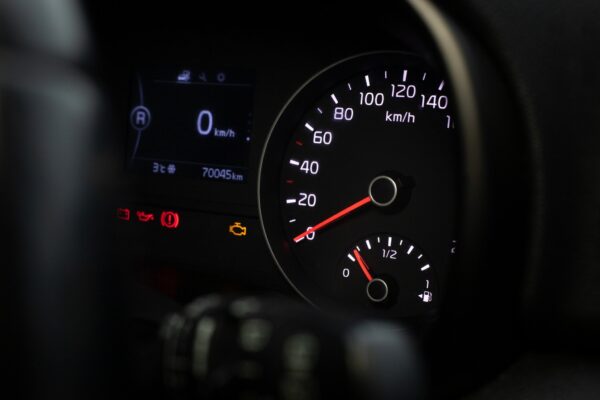
When a sensor detects an anomaly – insufficient oil pressure, misfires, a lambda sensor out of range, an injection fault – it generates a standardised fault code known as a DTC (Diagnostic Trouble Code). This code is stored in the control unit’s memory and can trigger a warning light. Reading, interpreting and putting these codes into context: that is the heart of a diagnostic.

When should you run a diagnostic?

  • An amber or red warning light is on the dashboard
  • The vehicle misfires when starting or accelerating
  • You notice unexplained excess fuel consumption
  • The car goes into limp mode (engine restriction, loss of power)
  • You are preparing a sale and want to know the true electronic condition
  • Your roadworthiness test is coming up and you want to anticipate potential failure points

Preventive diagnostic

A regular diagnostic makes it possible to detect silent faults – anomalies that have not yet triggered a warning light but are progressing. Recommended every 20,000 km or before each winter.

The 4 steps of a diagnostic

The procedure always follows the same logic, whether carried out at a traditional garage or via DriveBerry’s BerryScan™ from home.

  • OBD-II connection: plugging the tool into the diagnostic port, located under the dashboard on the driver’s side on the vast majority of modern vehicles.
  • Reading the DTC codes: querying all of the vehicle’s control units – engine, gearbox, ABS, airbag, air conditioning, power steering.
  • Contextual interpretation: the same code can have several different causes. This is where expertise – or DriveBerry’s AI – makes the difference: interpreting the code within the precise context of the vehicle (mileage, history, model, engine) to pinpoint the true root cause.
  • Report and recommendation: identified fault, affected part, level of urgency, repair cost range.

How much does a diagnostic cost?

Type of diagnostic Average price Turnaround
Traditional garage (diagnostic tool) €40 to €80 By appointment, 30-60 min
Official dealership €60 to €120 By appointment, 1-2 hours
BerryScan™ at home (DriveBerry) €49 Immediate, from your home
BerryScan™ at a partner station €9.99 Immediate, no travel required
DriveBerry AI diagnostic (conversational) Free 2 minutes

DriveBerry: two complementary levels of diagnostic

DriveBerry offers two approaches depending on your situation. The conversational AI diagnostic is entirely free: describe your symptoms in plain language, and our engine analyses them and produces two hypotheses with a price range in under two minutes, with no travel required. If an electronic readout is needed to refine the diagnostic, BerryScan™ takes over.

BerryScan™ reads your vehicle’s OBD-II codes directly from your home for €49, or from one of our partner service stations for just €9.99. The results are automatically sent to our AI for an enhanced, precise diagnostic.

In both cases, if work is required, DriveBerry puts you directly in touch with a certified garage from our network – at no extra cost.

Similar articles

Brake pads and discs: when should you replace them?

Mechanic changing a car's brake discs

Car won’t start? Identify the fault in 5 minutes

Mechanic preparing a maintenance checklist

Orange engine warning light on: panic or not?

Close-up of a vehicle's fuel gauge
View all articles