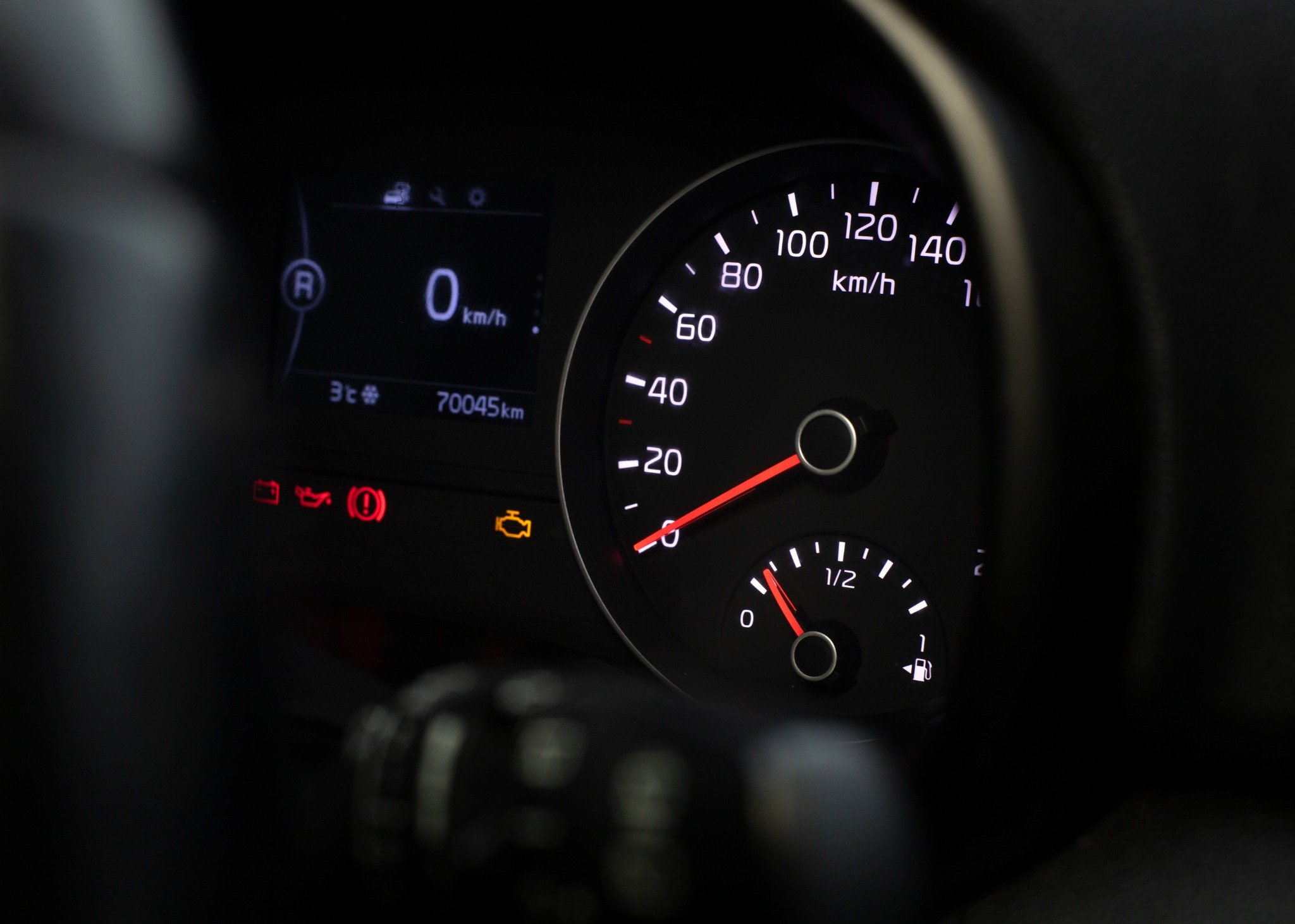
Orange engine warning light on: panic or not?

  • Understanding warning lights
  • 5 min read
2 June 2026
Orange engine warning light on: panic or not?

A light comes on your dashboard while you’re driving. The small engine icon, a triangle with an exclamation point, or a wrench – all of a sudden, an orange light is glowing where there wasn’t one before. First reaction: should you stop immediately, or can you keep driving to your destination?

The answer depends entirely on which warning light it is. And that’s exactly what DriveBerry helps you identify in seconds, with no technical jargon.

The colour code: the first piece of information to read

Even before identifying the symbol, the colour of the warning light gives you an immediate indication of the level of urgency. Modern dashboards follow a universal logic inherited from the traffic-light colour code. A red light signals an immediate danger or a serious failure – you must stop as soon as possible and switch off the engine. An orange or yellow light indicates a fault that deserves attention but doesn’t require you to stop right away; a garage visit within 48 to 72 hours is recommended. Green or blue lights are simply informational – high beams on, eco mode engaged, cruise control active – and require no action.

The 6 most common orange warning lights

1. The engine warning light – check engine

This is the most dreaded orange light, and also the most common. It signals that an electronic fault has been detected in the engine system and that an error code (DTC) has been logged in the ECU. The causes are extremely varied: faulty oxygen sensor, clogged EGR valve, degraded catalytic converter, intake leak, injection problem. Only an OBD scan can identify the exact code. You can generally keep driving carefully to the garage, unless the light is flashing – in that case, slow down and reach a professional quickly.

2. The oil pressure warning light

If this light comes on bright red, it’s an absolute emergency. Reduce your speed immediately, get to a safe place and switch off the engine. A lack of lubrication can cause irreversible engine damage within a few minutes of running. Check the oil level when cold before attempting to restart. If the level is correct and the light comes back on, the lubrication circuit itself is at fault.

3. The engine temperature warning light

It indicates engine overheating. Pull over as soon as possible, switch off the engine and wait for it to cool down completely before opening the bonnet. Never open the cooling system cap while it’s under pressure – you risk serious burns. The most common causes: low coolant level, faulty thermostat, circuit leak or out-of-service radiator fan.

4. The battery or alternator warning light

This light indicates that the electrical charging circuit is failing – most often the alternator or the accessory belt. Immediately limit the use of electrical consumers (air conditioning, defrosting, additional lights) to preserve what little energy remains in the battery, and head to a garage without delay.

5. The TPMS warning light – tyre pressure

One or more tyres are underinflated. Check the pressures when cold as soon as possible – a deflated tyre increases braking distances, promotes uneven wear and, in extreme cases, can blow out at high speed. The correct pressure values are shown on the label on the driver’s door pillar.

Summary: urgency and action for each warning light

Warning light Colour Urgency Action
Check engine Orange Medium OBD scan with BerryScan™, garage within 72h
Oil pressure Red Immediate Stop engine, check level
Temperature Red Immediate Stop immediately, let it cool down
Battery Orange Prompt Limit electrical use, garage
TPMS Orange Medium Check pressure when cold
Diesel DPF Orange Medium Motorway drive or garage

Why you should never ignore an orange warning light

An orange warning light is the early alert signal your car sends you before a serious failure occurs. In most cases, prompt action costs three to five times less than repairing a component damaged through neglect. Disconnecting the battery to ‘clear’ the light without addressing the cause is a common mistake – the code will come back, and the underlying fault will have kept worsening in the meantime.

Identify your warning light with DriveBerry's BerryScan™

BerryScan™ plugs into your vehicle’s OBD-II port, located under the dashboard on the driver’s side. In 90 seconds, the exact fault code is transmitted to our AI, which identifies the problem, assesses the urgency, generates a price range and offers an appointment at a DriveBerry-certified garage. No more going to a garage just to find out what your warning light means.

Similar articles

Car won’t start? Identify the fault in 5 minutes

Mechanic preparing a maintenance checklist

Car diagnostics: everything you need to understand before heading to the garage

Female mechanic running a diagnostic on a laptop

Brake pads and discs: when should you replace them?

Mechanic changing a car's brake discs
View all articles