
Your braking system is the first line of defence for your safety on the road. Yet brakes are one of the most frequently postponed maintenance items – right up until the warning signs become impossible to ignore. Understanding how your braking system works and recognising the signs of wear lets you act at the right moment, without overpaying.
Brake pads and discs: when should you replace them?
How does disc-and-pad braking work?
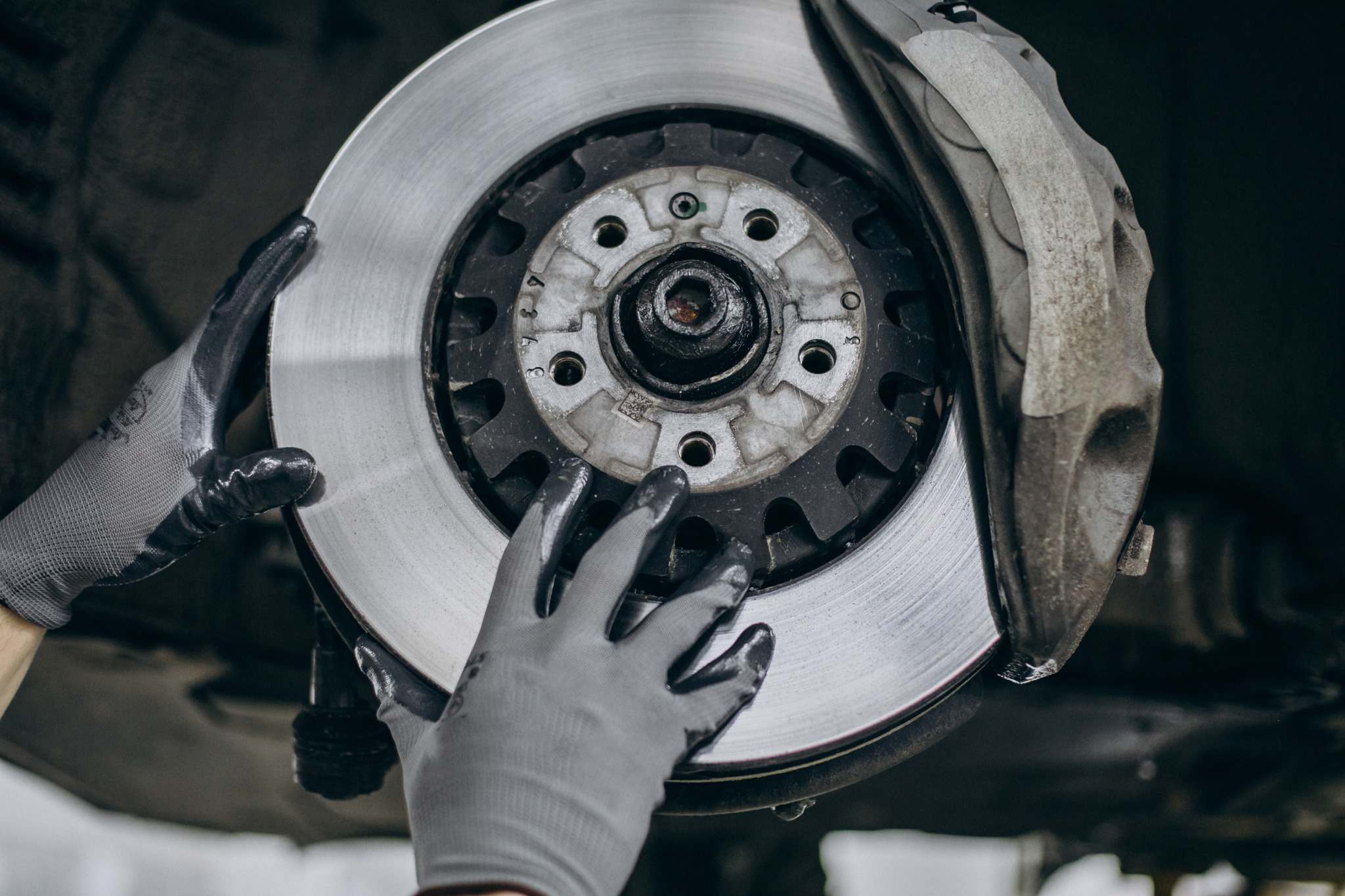
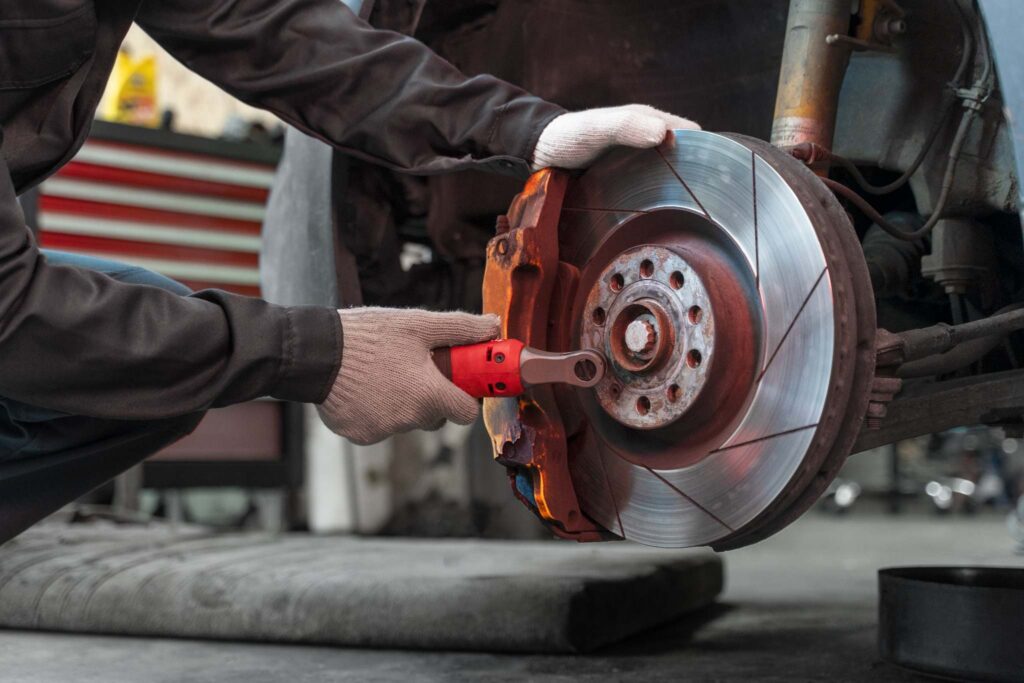
On the vast majority of modern vehicles, braking works on a simple principle. When you press the pedal, the brake calipers clamp the pads against the discs, which are attached to the wheels. This friction slows the rotation of the wheels and therefore the vehicle. The pads wear down with every braking action – that is their job. The discs wear down too, but more slowly. Both components are consumables that require regular replacement, independently of other servicing.
Some older or lighter vehicles are still fitted with a drum brake at the rear, which works differently but follows a similar wear logic.
The 5 warning signs you should not ignore
- Whistling or squealing every time you brake: the metal wear indicator is rubbing against the disc – replace urgently.
- Vibrations in the pedal or steering wheel when braking: the disc is warped or worn unevenly.
- The vehicle pulls to one side when braking: asymmetric wear between the two sides.
- A spongy pedal that sinks deeper than before: brake fluid to be checked or a caliper problem.
- Brake pad wear warning light on the dashboard: electronic indicator calling for immediate replacement.
The 2 mm rule
Once the friction material reaches 2 mm in thickness, replacement is recommended. Below that, the metal rubs directly against the disc – triple the damage and dangerously reduced braking.
How often should you change your brakes?
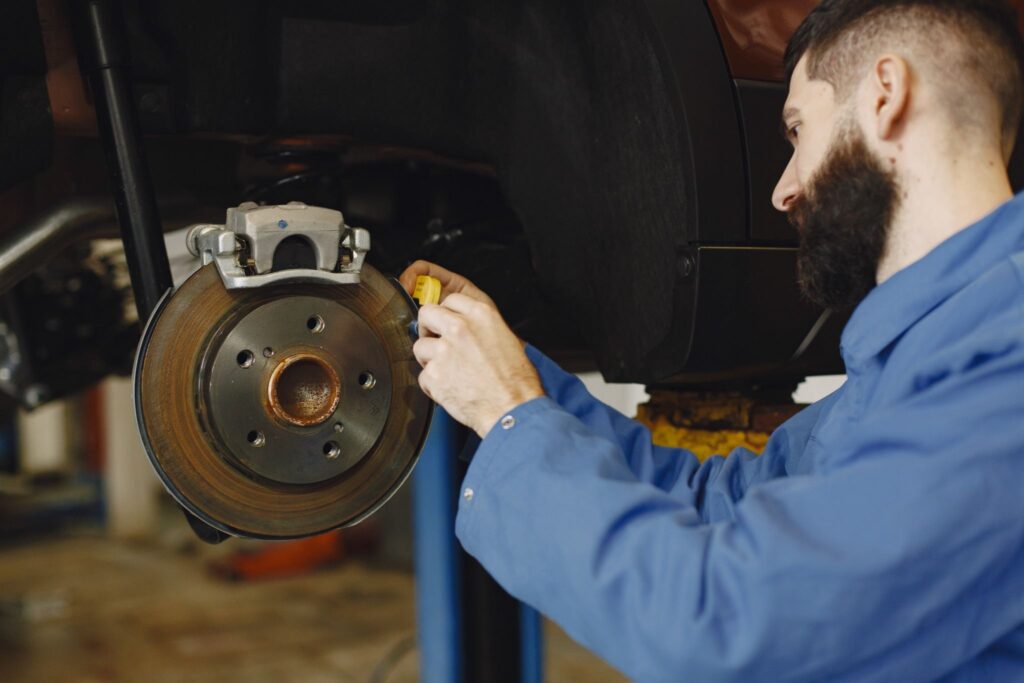
There is no universal mileage – wear depends directly on your driving style and your journeys. An urban driver making frequent short stops will wear out their pads two to three times faster than a motorway driver.
| Component | Indicative mileage | Accelerated wear factor |
|---|---|---|
| Front pads | 25,000 - 50,000 km | Urban driving, frequent stops |
| Rear pads | 40,000 - 80,000 km | Heavy loads, towing |
| Front discs | 60,000 - 100,000 km | Repeated harsh braking |
| Rear discs | 80,000 - 120,000 km | SUVs, heavy vehicles |
Budget to plan for
Prices vary depending on the vehicle, the quality of the parts and the region. Here are the ranges observed on the French market:
- Front pads (parts + fitting): €100 to €250 per axle
- Rear pads (parts + fitting): €80 to €180 per axle
- Discs + pads on a complete axle: €200 to €500
- Full 4-wheel brake overhaul: €500 to €1,200
Always check that labour is included in the quote, that the brake fluid is inspected (a bleed is recommended every 2 years or 40,000 km), and that a braking test is carried out once the work is complete. A DriveBerry-certified garage guarantees this level of service as standard.
DriveBerry: get a braking quote in 3 clicks
Describe your symptoms on DriveBerry – noise, vibration, braking behaviour. Our AI analyses your situation, generates a price range tailored to your vehicle and offers you an appointment at a DriveBerry-certified garage near you. You arrive at the garage already aware of the fair price – with no nasty surprises.
Similar articles

Car diagnostics: everything you need to understand before heading to the garage
Orange engine warning light on: panic or not?
Car won’t start? Identify the fault in 5 minutes